Hyperping vs StatusCake
Hyperping uptime monitoring plus status pages, aimed at small engineering teams. StatusCake uptime monitoring with public status pages included. Here is how they actually differ.
Verdict in one line each
Hyperping
Choose it if: Small teams who want monitoring and a status page bundled without enterprise complexity.
Watch out: Smaller vendor. Check the monitoring region coverage matches where your users are.
StatusCake
Choose it if: Teams who want detection and customer communication from one vendor.
Watch out: The status page is a feature of a monitoring suite rather than the main product, so design and audience controls are shallower than a dedicated tool's.
Differences that actually matter
On every feature we have verified for both tools, these two behave the same. The decision comes down to price, ecosystem fit and the qualitative notes below.
Not yet verified for both: remove vendor branding, sms notifications, rss / atom feed, embeddable widget, private status pages, audience-specific pages, sso / saml. We leave these blank rather than guessing.
Full feature comparison
Rows where the two tools differ are highlighted.
| Feature | Hyperping | StatusCake |
|---|---|---|
| Custom domainServe the status page on your own domain, e.g. status.example.com. | Yes | Yes |
| Remove vendor brandingWhether the vendor's own branding can be removed from the public page. | Yes | Not verified |
| Per-component statusBreak the page into individual services or components with independent states. | Yes | Yes |
| Scheduled maintenanceAnnounce planned windows in advance and notify subscribers. | Yes | Yes |
| Email subscribersLet customers subscribe to incident updates by email. | Yes | Yes |
| SMS notificationsDeliver incident updates over SMS. | Yes | Not verified |
| Slack notificationsPush incident updates into a Slack workspace. | Yes | Yes |
| WebhooksFire an HTTP callback when incident state changes. | Yes | Yes |
| RSS / Atom feedMachine-readable incident feed. | Yes | Not verified |
| Embeddable widgetDrop a live status badge or banner into your own app. | Yes | Not verified |
| Private status pagesRestrict the page to authenticated or invited viewers. | Not verified | Yes |
| Audience-specific pagesShow different components to different customer segments. | Not verified | Not verified |
| Built-in uptime monitoringThe tool can detect outages itself, rather than only displaying states you set manually. | Yes | Yes |
| Public APICreate and update incidents programmatically. | Yes | Yes |
| SSO / SAMLSingle sign-on for your internal team members. | Not verified | Not verified |
| Self-hostableSource available and deployable on your own infrastructure. | No | No |
Yes supported · No not supported · not yet verified by us (we show a dash rather than guessing).
Pricing
Pricing
Not yet verified. We have not independently confirmed this against the vendor since the last pricing change. Check the vendor page before relying on it.
Pricing
Not yet verified. We have not independently confirmed this against the vendor since the last pricing change. Check the vendor page before relying on it.
What each one looks like
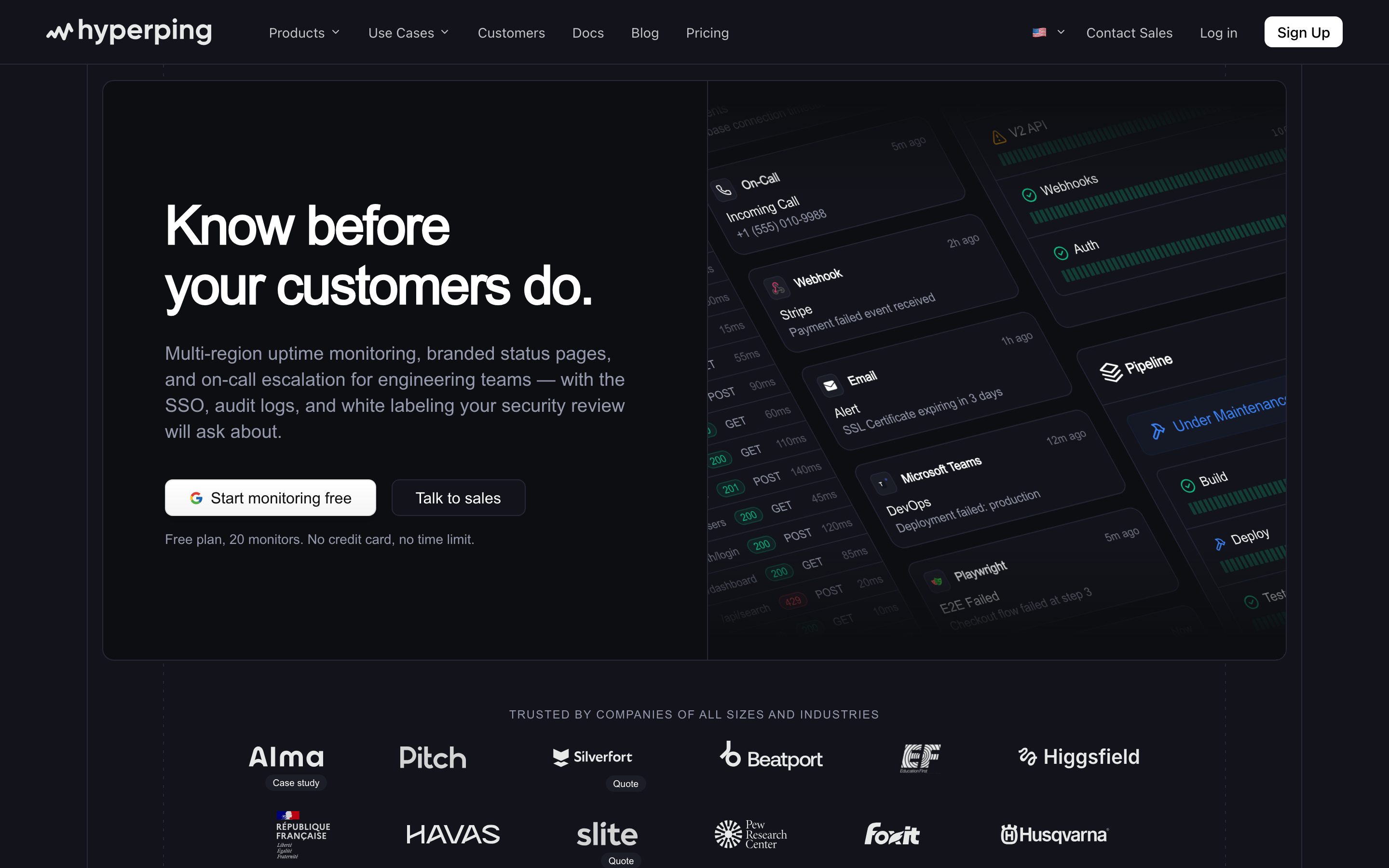
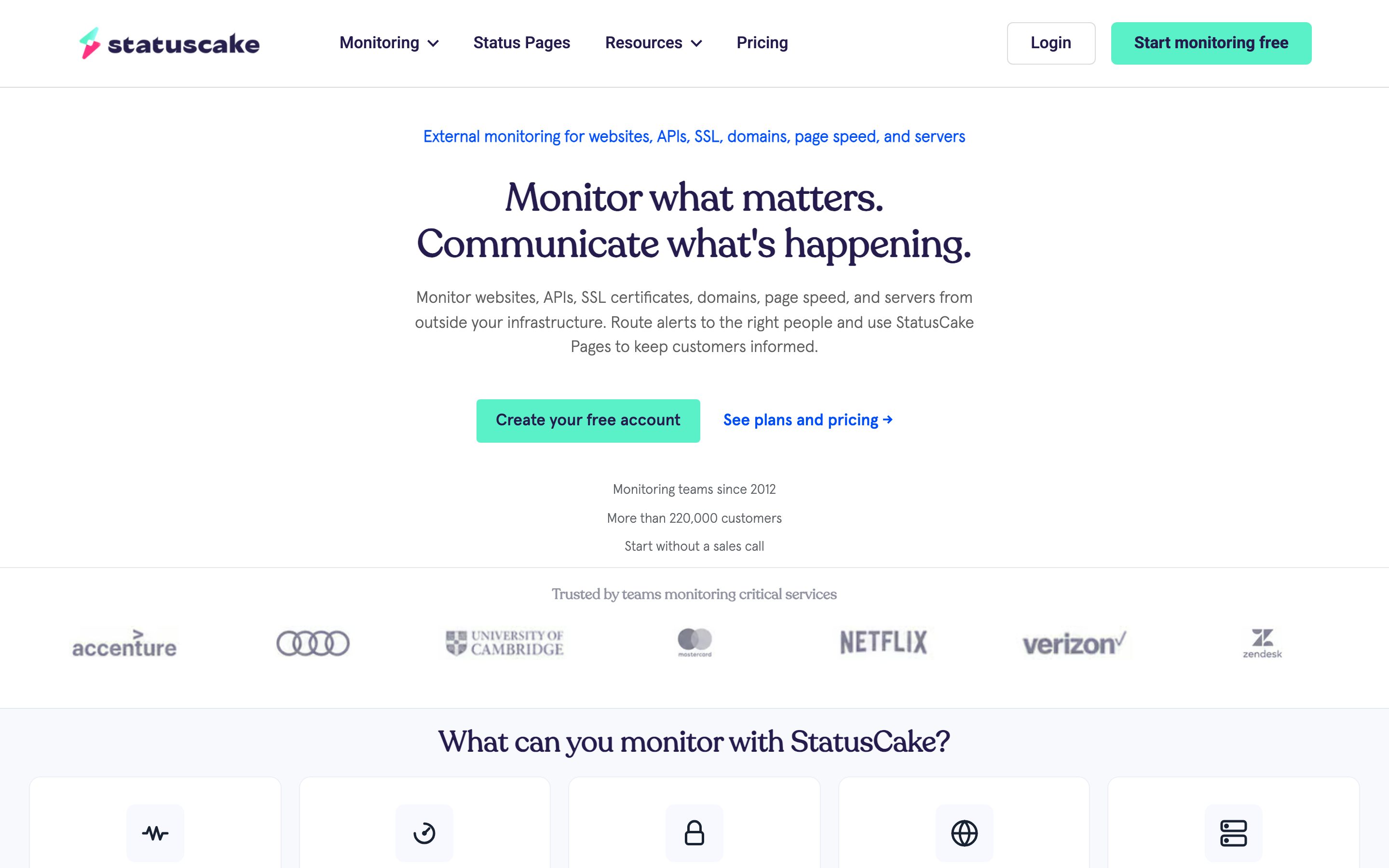
Common questions
Do Hyperping and StatusCake include uptime monitoring?
Hyperping includes its own uptime monitoring; StatusCake includes its own uptime monitoring. If you already run a monitoring stack, a bundled monitor is overlap rather than value; if you do not, buying both separately usually costs more.
Can Hyperping or StatusCake be self-hosted?
Neither is self-hostable; both are hosted services. If keeping incident data in-house is a hard requirement, look at an open-source option instead.
Which is cheaper, Hyperping or StatusCake?
Pricing in this category moves often and both vendors meter different things, so we link to the live pricing pages rather than quoting figures we have not re-verified. The variable that usually decides it is subscriber count: tools that charge per notified subscriber get expensive at exactly the point your product starts working.