Cachet
The long-standing open-source status page you host yourself.
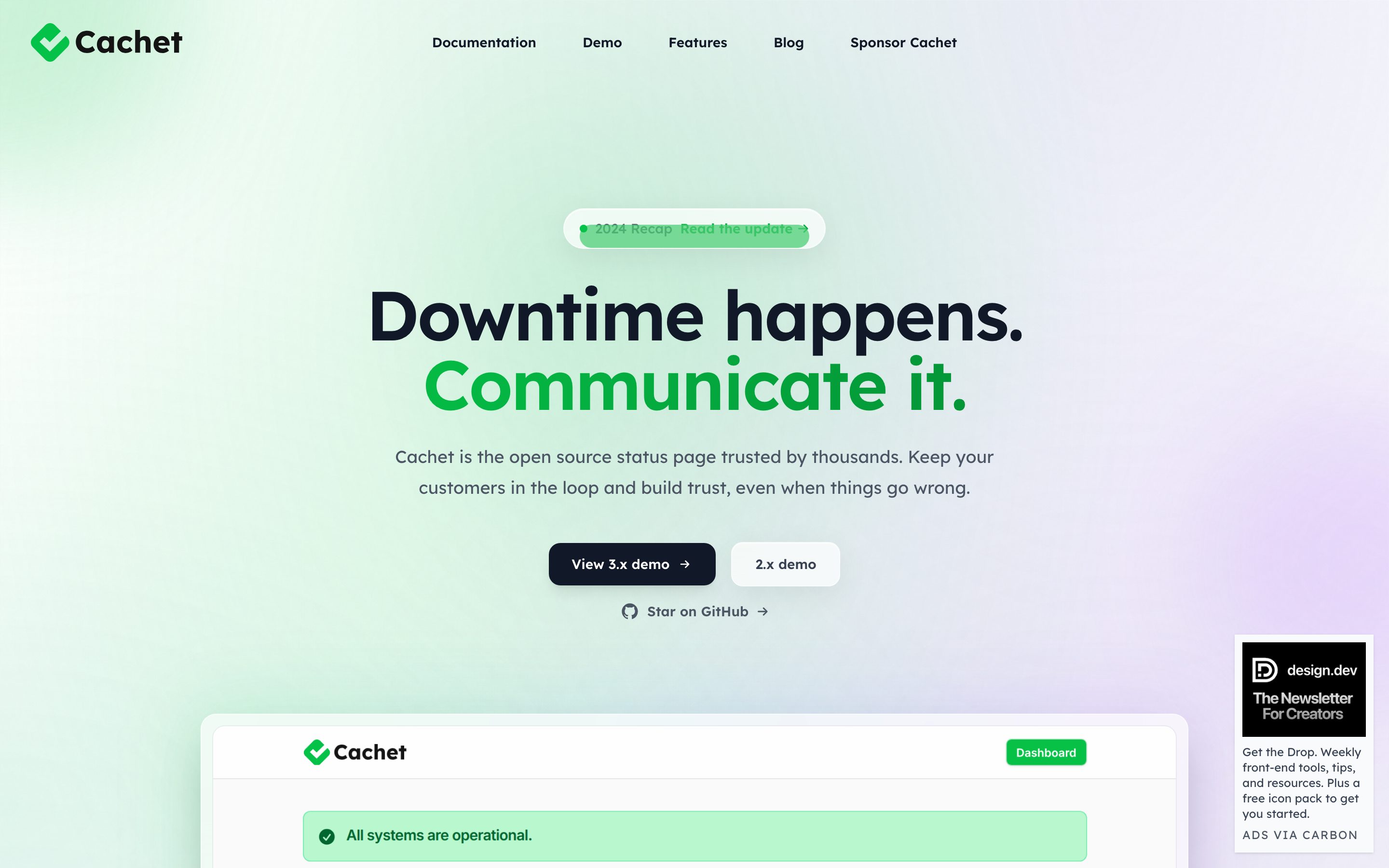
Where Cachet fits
Cachet has been the default answer to 'open-source status page' for the best part of a decade. You run it on your own infrastructure, which is the entire point: incident data never leaves your perimeter and there is no per-subscriber meter. What you take on instead is operating it, including the uncomfortable detail that a status page is only useful when it is up and the thing it reports on is down.
Best for
Teams that must keep incident data in-house and have someone to run it.
Watch out for
You now own uptime for the status page itself. Hosting it alongside the system it reports on is the classic mistake and defeats the purpose.
Cachet pricing
Pricing
No vendor pricing. Cachet is open source and self-hosted, so there is no subscription. The cost is the infrastructure you run it on and the time someone spends operating it.
Cachet features
Verified as supported
- Custom domain
- Remove vendor branding
- Per-component status
- Scheduled maintenance
- Email subscribers
- RSS / Atom feed
- Public API
- Self-hostable
Verified as not supported
- Built-in uptime monitoring
| Feature | Cachet |
|---|---|
| Custom domainServe the status page on your own domain, e.g. status.example.com. | Yes |
| Remove vendor brandingWhether the vendor's own branding can be removed from the public page. | Yes |
| Per-component statusBreak the page into individual services or components with independent states. | Yes |
| Scheduled maintenanceAnnounce planned windows in advance and notify subscribers. | Yes |
| Email subscribersLet customers subscribe to incident updates by email. | Yes |
| SMS notificationsDeliver incident updates over SMS. | Not verified |
| Slack notificationsPush incident updates into a Slack workspace. | Not verified |
| WebhooksFire an HTTP callback when incident state changes. | Not verified |
| RSS / Atom feedMachine-readable incident feed. | Yes |
| Embeddable widgetDrop a live status badge or banner into your own app. | Not verified |
| Private status pagesRestrict the page to authenticated or invited viewers. | Not verified |
| Audience-specific pagesShow different components to different customer segments. | Not verified |
| Built-in uptime monitoringThe tool can detect outages itself, rather than only displaying states you set manually. | No |
| Public APICreate and update incidents programmatically. | Yes |
| SSO / SAMLSingle sign-on for your internal team members. | Not verified |
| Self-hostableSource available and deployable on your own infrastructure. | Yes |
Yes supported · No not supported · not yet verified by us (we show a dash rather than guessing).